
How the Lasso Properties Hub helps organize years of property submissions, preserve knowledge, and build a stronger foundation for future opportunities.
Economic developers understand the value of building assets that appreciate over time.
- Communities invest in industrial parks years before a prospect arrives.
- Utilities expand infrastructure to prepare for future growth.
- Workforce development programs are established long before a company needs to hire its first employee.
Site certifications, transportation improvements, and marketing initiatives all share something in common: they create value long before they are needed.
The same principle applies to an aggregated set of property intelligence. Every project introduces new sites, new buildings, new community information, and new insights about what makes a property a strong fit for a particular opportunity.
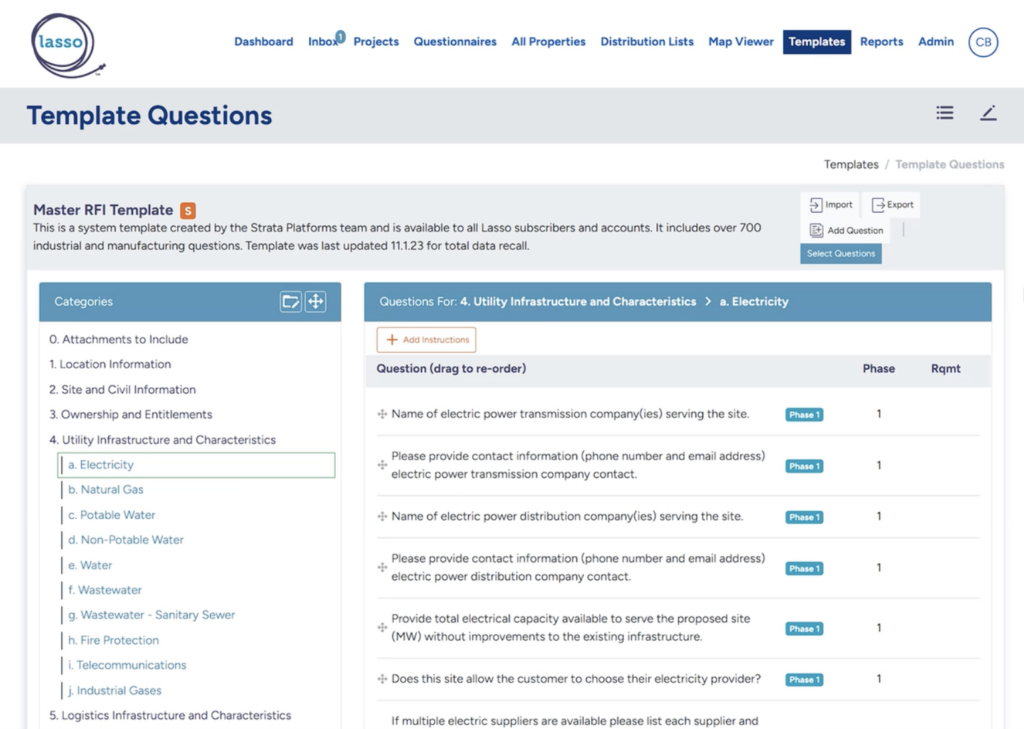
Over time, organizations accumulate an extraordinary amount of information through RFIs, site searches, consultant requests, and direct prospect engagement. Yet much of that knowledge remains tied to individual projects, spreadsheets, email chains, and the memories of the people who participated in them.
Projects end.
Staff members retire.
Teams change.
But the property intelligence generated during those projects remains valuable for years to come.
Organizations don’t lack property information; they have in fact spent years building it. The challenge is making that information accessible in a way that continues creating value long after a project concludes.
That is the idea behind the Lasso Properties Hub. Lasso was originally built to help economic development organizations, utilities, railroads, and site selection teams manage projects and evaluate opportunities more efficiently. As the platform evolved, we began to recognize something important. Every project was contributing to a growing body of property knowledge that could be useful well beyond the immediate opportunity.
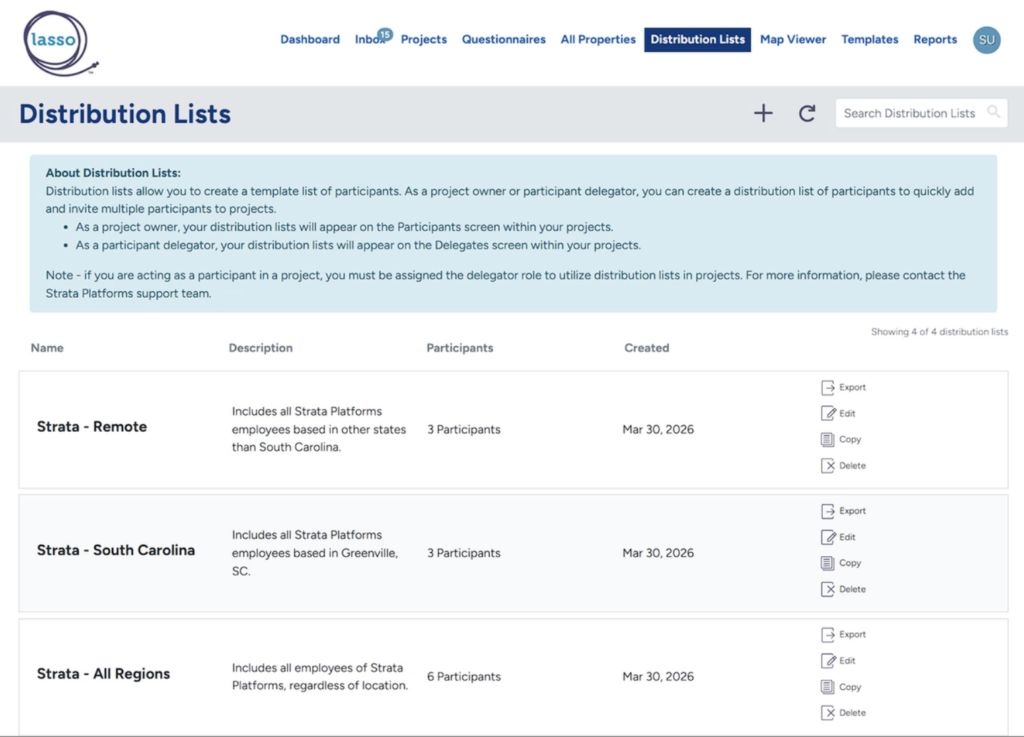
The Properties Hub was designed to preserve and compound that value. Instead of viewing properties through the lens of a single project users can now see every property they have reviewed across years of activity in one centralized property inventory list and GIS mapping experience. Properties that were once scattered across individual projects become part of a larger organizational asset that continues to grow with every submission, every evaluation, and every opportunity pursued.
A Single Place to Access Years of Property Intelligence Work
For many organizations, one of the most valuable aspects of the Properties Hub is organizational memory. A site submitted three years ago for a manufacturing project may suddenly become relevant for a new prospect. A building that was evaluated by a previous team member may contain information that helps support a future opportunity. A property owner relationship developed during one project may become important during another. New team members can benefit from work performed by previous staff members, and organizations can preserve valuable property intelligence even as people and priorities change.
Historically, finding that information often required digging through spreadsheets, folders, archived projects, or institutional memory. Today, users can log into Lasso and view all properties submitted across all projects from a single location.
Search, filtering, sorting, mapping, and export tools make it easier to leverage knowledge that has already been collected rather than recreating work that has already been done.
Seeing the Bigger Picture: Visualizing Years of Property Intelligence Work
As property inventories grow, context becomes increasingly important. The second generation of the Properties Hub introduced expanded mapping and visualization tools that help users understand how opportunities relate to one another geographically. For many organizations, the interactive GIS map becomes a powerful way to communicate the depth and breadth of their property inventory to leadership teams, stakeholders, funders, and prospects. Properties can be viewed on interactive maps, explored through multiple map styles, filtered by site or building type, and presented through brochure exports for internal teams and clients. These enhancements help organizations transform years of property collection efforts into a visible asset that can be explored, shared, and understood across the markets they serve.
From Property Storage to Property Strategic Intelligence
First, organizations store data. Then, organizations need to see the knowledge. Third, organizations want to learn from the knowledge. Data layers, heat maps, and cluster mapping provide additional context that helps users understand property concentrations, identify patterns, and navigate large collections of sites and buildings more effectively.
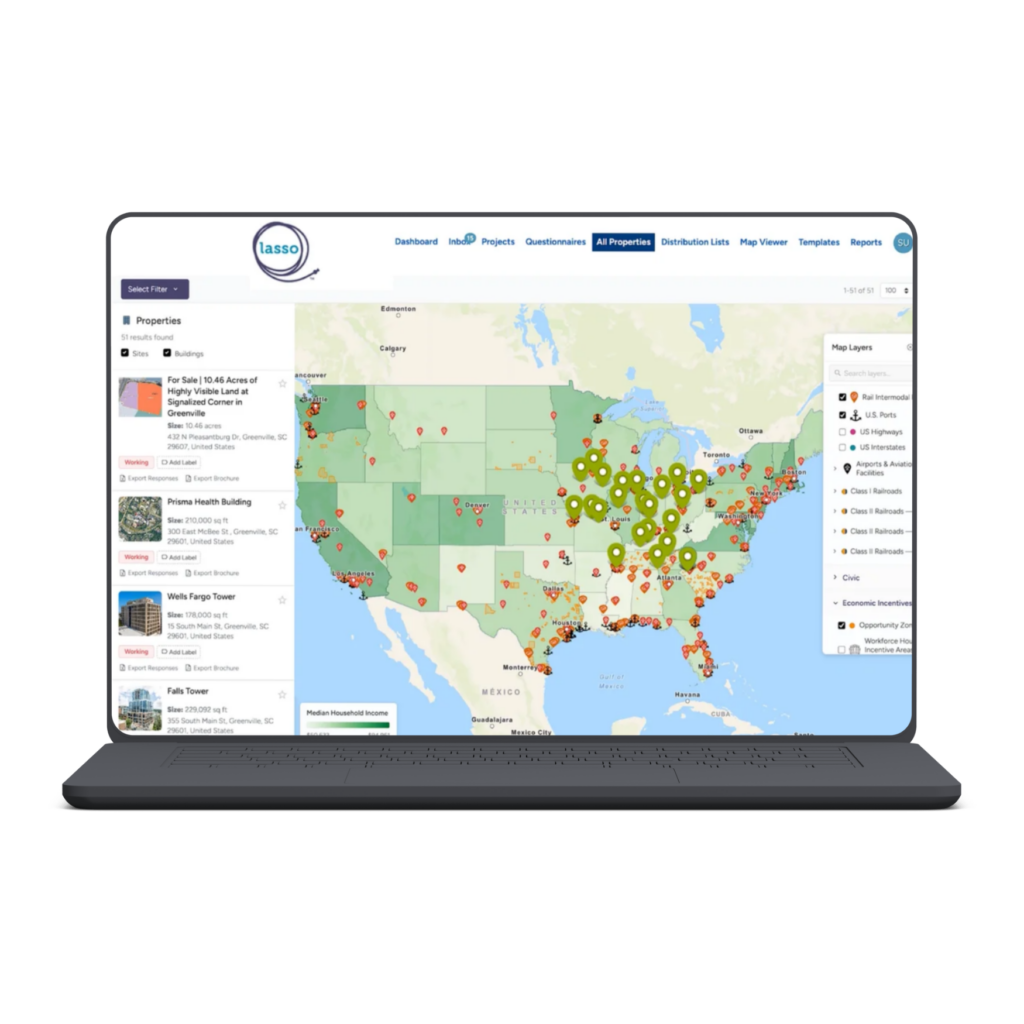
These tools support a more strategic review process by helping organizations focus attention where it matters most. Instead of managing hundreds or thousands of individual records, teams can begin identifying trends, opportunities, and relationships across their entire property portfolio. The result is not simply a larger database. It is a stronger property asset that grows with every project.
Historically, many teams viewed Lasso primarily through the lens of active projects. A project arrived, properties were collected and evaluated, and the workflow moved forward. Each submission strengthens the database. Each evaluation adds context. Each completed project leaves behind knowledge that can support future opportunities.
Why This Changes How Organizations Think About Lasso
Every project leaves something behind. Every submission strengthens the inventory. Every evaluation adds context. Every completed project contributes knowledge that can support future opportunities. New team members gain access to years of accumulated experience. Organizations preserve institutional knowledge even as staff changes occur. Communities build a growing record of the properties they have promoted and the opportunities they have pursued.
The platform becomes valuable not only when a project arrives, but every day in between projects, as organizations continue building their property intelligence.
The Lasso Properties Hub helps organizations preserve property knowledge, build on past work, and create a stronger foundation for future opportunities. Rather than starting over with every project, teams can leverage years of accumulated experience in a single system that grows more valuable over time. Every project leaves something behind, and the Properties Hub ensures that those contributions become part of a growing organizational asset.
If you would like to learn more about how the Lasso Properties Hub can help your organization preserve property intelligence and build a stronger property asset to support future new business or economic development, reach out to Susan Donkers for a conversation or demonstration.

Schedule a Call with Susan Donkers
If any of this feels familiar to your community, we would be glad to talk through what you are seeing and how others are approaching the same challenges.
Stay Informed
If this conversation resonates, you’ll want to stay connected.
Sign up for The Shortlist—our monthly newsletter featuring stories like this, industry insight, and practical tools designed for modern economic development and site selection.